Key Takeaways
- Being 'cleared to work' after a hand or nerve injury does not always mean your hand is ready for the real demands of your job.
- A functional capacity evaluation (FCE) tests what your body can safely do, such as gripping, lifting, and repeating tasks, instead of only checking how your injury looks on an exam.
- FCE results are compared to your actual job duties, which helps set a realistic and safe return-to-work timeline.
- The process gives patients, doctors, and employers the same clear facts to work from, which can lower the risk of re-injury.
- Pittsburgh Hand & Nerve offers expert functional capacity evaluations at its Trafford office for patients across the Pittsburgh area, and you can request an appointment with Pittsburgh Hand & Nerve online.
Why 'Cleared to Work' Isn't Always a Simple Decision After a Hand or Nerve Injury?
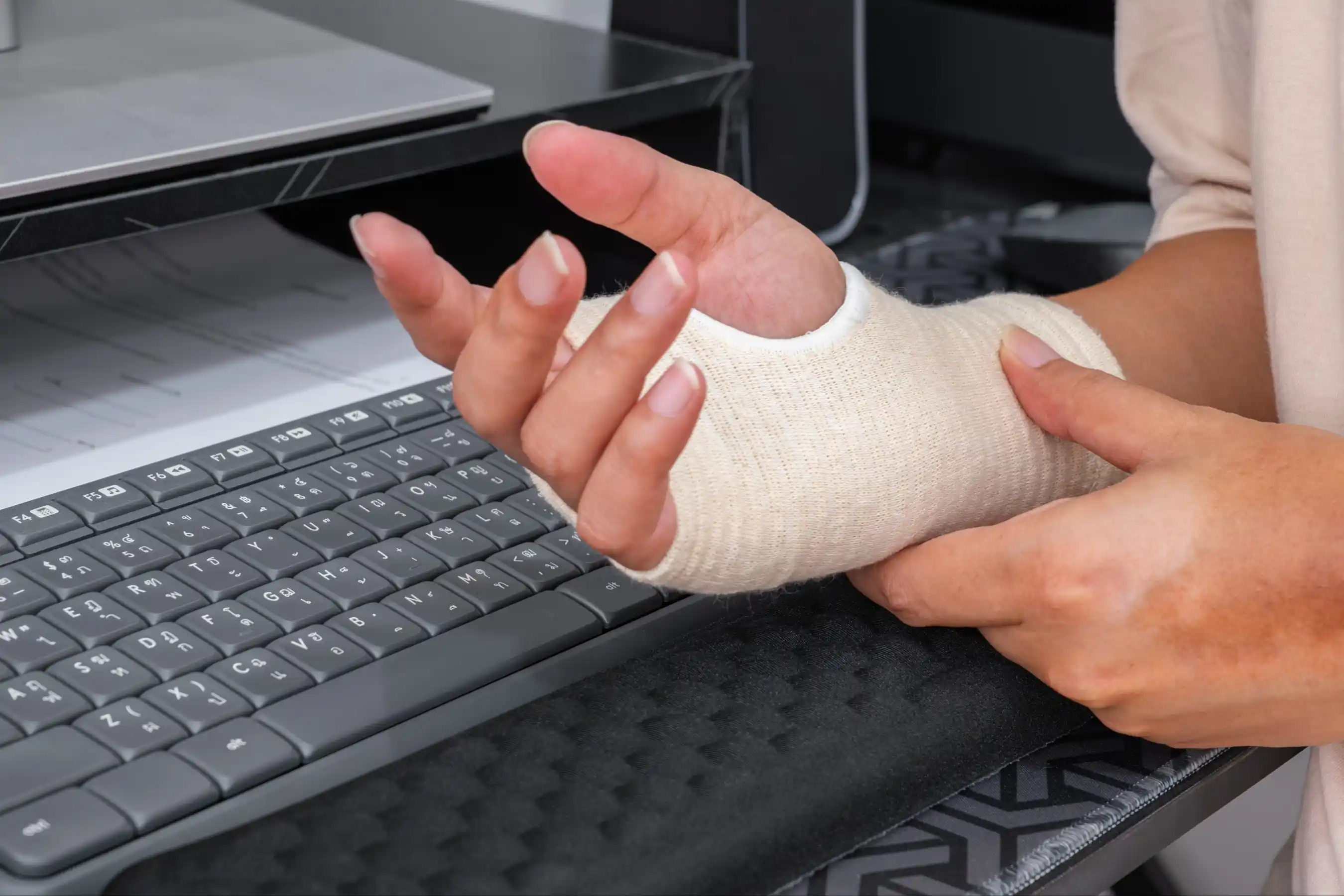
Your hands do almost everything at work. They grip tools, type, lift boxes, and handle fine details. After a fracture, tendon injury, or nerve injury, your hand may look healed long before it can handle a full shift.
That gap is where problems start. A wound can close, and an X-ray can look normal while you still have:
- Weak grip or pinch strength
- Numbness or tingling that makes it hard to feel what you are holding
- Pain that builds up after repeated motions
- Stiffness that slows you down on detailed tasks
Going back too soon can lead to setbacks or a new injury. Waiting too long can cost you income and confidence. A functional capacity evaluation helps answer the question in the middle: what can you safely do right now?
What an FCE Measures That a Standard Exam Doesn't
A functional capacity evaluation (FCE) is a detailed set of tests, activities, and observations that shows your overall physical abilities. At Pittsburgh Hand & Nerve, the functional capacity evaluation in Pittsburgh is a one-on-one assessment that lasts about three to four hours.
A standard office visit focuses on your injury. An FCE focuses on what you can do with it.
| Standard Office Exam | Functional Capacity Evaluation (FCE) | |
|---|---|---|
| Main goal | Check healing and decide on treatment | Measure your physical abilities for work and daily tasks |
| Length | Usually a short visit | About 3 to 4 hours, one-on-one |
| What is tested | Range of motion, the injured area, and imaging results | Strength, endurance, and task-based activities linked to your job |
| Compared against | What is normal for the injury | Your specific job description |
| Result | Diagnosis and treatment plan | An objective picture of what you can safely do now |
How FCE Scoring Works
Many people search for 'functional capacity evaluation scoring' and expect a single pass-or-fail grade. That is not how it works. FCE results describe your abilities across many areas, such as grip, lifting, carrying, and how long you can repeat a task. This detailed picture is more useful than one number.
Research also shows that FCE results are shaped by more than muscle strength. A review in the Iowa Orthopaedic Journal found that FCE performance is influenced by physical ability, pain, and how people view their own limits. That is why a good FCE looks at the whole person, not just the hand.
How FCE Results Connect to Your Specific Job Duties?
An FCE is most helpful when it is tied to a real job. During the evaluation, testing can recreate tasks from your job description. For example:
- A warehouse worker might be tested on lifting and carrying.
- An electrician might be tested on fine finger movements and grip.
- An office worker might be tested on keyboard use and how long they can repeat a motion.
Pittsburgh Hand & Nerve uses the information from your FCE to set a baseline of your current function and compare it to your job description. This shows exactly where you meet your job's demands and where you still need work.
FCE and Workers' Compensation
If you were hurt on the job, your FCE may play a role in your workers' compensation (workers' comp) claim. Many people searching for 'FCE workers compensation' want to know how results are used.
In Pennsylvania, if your employer has proof that a job is available within your medical restrictions, the state's Workers' Compensation and the Injured Worker guide explains that you may get a job offer. You can accept or decline it, but declining may affect your wage-loss benefits. Clear, objective information about your abilities helps make sure any restrictions are accurate.
Pittsburgh Hand & Nerve accepts all workers' compensation insurance plans. Learn more about workers' compensation care for hand and nerve injuries.
FCE vs. Fitness for Duty Evaluation
You may also hear the term 'fitness for duty evaluation.' Both look at whether you can safely do your job. A fitness for duty evaluation is a broader decision made for an employer. An FCE is a detailed physical test that can provide data for that kind of decision. If your employer has asked for a fitness for duty evaluation, ask whether an FCE is part of what they need.
Setting a Realistic, Safe Return-to-Work Timeline
An FCE does not just say 'yes' or 'no.' It helps your care team plan the next steps. Based on your results, Pittsburgh Hand & Nerve can:
- Build a therapy program aimed at your weak spots
- Create a timeline for a safe return to work
- Set limits to help prevent re-injury
If your results show you need more strength or control, hand therapy may come next. Pittsburgh Hand & Nerve has its own in-house occupational therapist and certified hand therapist (CHT), Denver Byron, OTR/L CHT. Learn more about occupational therapy and hand therapy at Pittsburgh Hand & Nerve.
According to Harvard Health Publishing, a certified hand therapist is an expert in rehabilitating the hand and entire arm, and a course of hand therapy often lasts about six weeks, though it can be shorter or longer.
How the FCE Process Supports Both Patients and Employers?
A return to work goes best when everyone has the same facts.
For patients, an FCE:
- Gives you objective proof of what you can and cannot do yet
- Helps protect you from being pushed back too soon
- Builds confidence that your hand can handle the job
For employers, an FCE:
- Clarifies safe job duties or temporary changes
- Supports planning for light duty or modified work
- Helps lower the chance of a repeat injury
Plan a Safer Return to Work With Pittsburgh Hand & Nerve
An FCE turns the hard question of 'Am I ready?' into clear, measurable answers. Pittsburgh Hand & Nerve combines expert hand and nerve care with objective testing to help you return to work safely.
To schedule your functional capacity evaluation with Pittsburgh Hand & Nerve, request an appointment online. All FCEs are performed at the Trafford office, serving patients throughout the Pittsburgh area.
Frequently Asked Questions
What is a functional capacity evaluation for a hand injury?
It is a detailed, hands-on assessment that measures your grip, strength, endurance, and ability to do job-related tasks after a hand, wrist, or nerve injury. The results show what you can safely do right now.
Where can I find a functional capacity evaluation near me?
If you live in or around Pittsburgh, Pittsburgh Hand & Nerve performs FCEs at its Trafford, PA, office. Each evaluation is one-on-one and lasts about three to four hours.
Is an FCE part of a workers' compensation claim in Pennsylvania?
It can be. An FCE gives objective information about your physical abilities, which may help guide work restrictions and return-to-work decisions in a workers' comp case. If your employer has posted a list of approved providers, check that list or ask your claims adjuster before scheduling.
Is an FCE the same as a fitness for duty evaluation?
Not exactly. A fitness for duty evaluation is a broader employment decision. An FCE is a detailed physical test that can provide data to support that decision.
What happens after my FCE results come back?
Your results help your care team plan your next steps. This may include a therapy program, a return-to-work timeline, and limits to help you avoid re-injury.
